When Every Feed Has a Perfect Sunday
How social media changed my relationship with life’s ordinary, imperfect joys.
Last Sunday, I was at home, bored and restless, feeling like I was wasting a perfect day with perfect weather. I walked toward downtown, where I usually enjoy the shops, architecture, and cafes while doing my favorite activities: reading and people watching. This is the perfect recipe for me to enjoy life’s little joys —the “resonance” as I recently learned from the book The Story of Your Life.
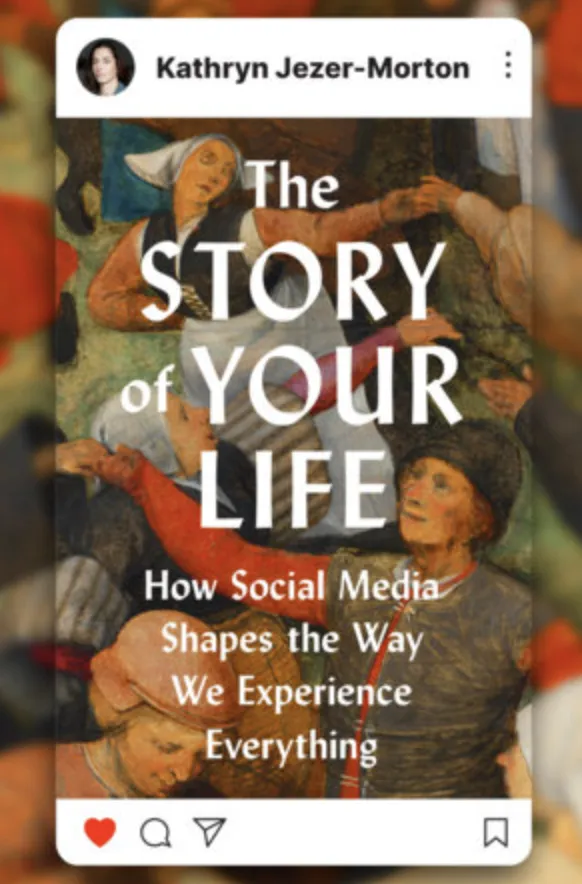
Hartmut Rosa, who is not the author of the book but is quoted in it, describes it as the ability to be affected by an experience and to appreciate how it affects us. We yearn for resonance, but we cannot summon it on demand. That is exactly what makes it so powerful.
All that wisdom came to me later, though. That Sunday, I was out to chase a little resonance of my own.
The first cafe I sat down at served me the wrong kind of apple cider. I had wanted the refreshing, bubbly alcoholic kind, but ended up with what I consider a pee-like, sugary, non-alcoholic version. Still, I was dead set on enjoying the sun and my book on the patio, so I did not mind. That was until bees started to swarm my drink. They swarmed it. There was no way I could take a sip without swallowing one. You think I’m exaggerating, but no. I had to abandon my drink and leave the premises.
My second stop was the chocolate shop I visit whenever I want to indulge myself (which is often). I ignored my go-to mint favorite, took a risk on something new, and discovered the worst chocolate I have ever had there.
The third stop was the liquor store, where I abandoned all adventurousness and bought a wine I already knew was good. No incident to report.
But I was still chasing my perfect Sunday moment, so I headed to another coffee shop. It was crowded, I was sweaty, and the matcha was not very good, but I found a seat and returned to my book. Unsurprisingly, I could not focus. Then I found the real finishing touch: a piece of plastic in my drink.
A few days before that Sunday, we went to friends’ house for a BBQ and watched a beautiful pinkish sunset appear over their backyard. No one had gone looking for it; it simply happened. And no one tried to capture it.
Social media changed how we experience resonance. The author argues that social media is designed to harness and amplify resonance, but often does the opposite. To post it, you need to capture it. Capturing is an act of control and resonance cannot be controlled.
I still believe we need to act to encounter resonance, though. That is what rituals, celebrations, and hobbies are for. We just have to accept our limits.
While I am writing this, I realized Instagram did not make me jealous of lavish lives; it made me jealous of ordinary people’s apparent moments of resonance. It was like all these people were enjoying their homemade cookies and the fall leaves and the road trips more than I do. I intellectually knew these platforms are designed to amplify, but it turned out I didn’t know know. I ended up depressed.
Of course, all storytelling involves some embellishment. Memoirs do. Diaries can too, even unconsciously. The issue is not embellishment itself; it is that social media shows us only the embellished side. We rarely see the family dinner that was merely fine, or the day that was simply “meh” —the flat stories that make up most of life. What remains is a feed full of people seemingly wringing joy from every moment. Seeing that constantly, every day, messed with my sense of my own life.
"The emotional range of the space is structurally limited, which then limits our opportunities as consumers of media to encounter interesting, challenging, or otherwise evocative representations of human emotion. … If we’re only being exposed to a very narrow emotional register on social media, it begins to shape our reality over time."
The Story of Your Life: How Social Media Shapes the Way We Experience Everything was a 4/5 star read, but I reflected a lot and, maybe more importantly, it made me really serious about quitting social media. Two weeks after reading the book, I moved to Bear Blog.
You can also watch Kathryn Jezer-Morton discuss her book in The Atlantic podcast. Highly recommended!